History of Numbers: From Tally Marks to Zero
Discover the fascinating history of numbers. Trace the evolution of counting from ancient tally marks and Roman numerals to the invention of zero and modern digits.
Read articleEducational number hub
Explore articles about the story of numbers, digit symbols, ancient numeral systems, famous numbers, zero, infinity, and the everyday facts that make numbers memorable.
Browse by topic
Each category shows the four newest articles in a scroll gallery. Open a category to see every published guide from that topic.
Category
Learn how humans developed counting, place value, zero, number words, and modern numeral systems.
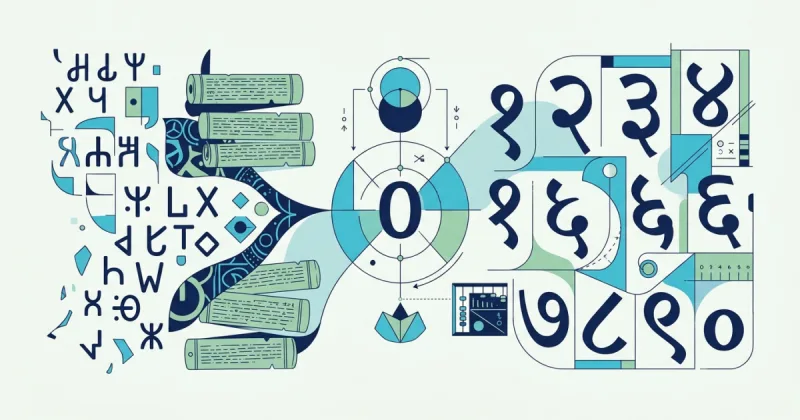
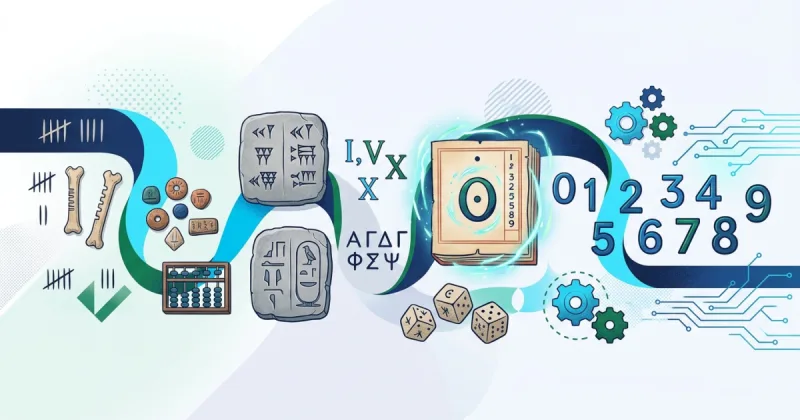
Discover the fascinating history of numbers. Trace the evolution of counting from ancient tally marks and Roman numerals to the invention of zero and modern digits.
Read articleDiscover the fascinating history of Devanagari numerals, tracing their evolution from ancient Brahmi symbols to the modern digits used in Hindi, Sanskrit, Marathi, and Nepali.
Read articleCategory
Explore Egyptian, Babylonian, Roman, Greek, Mayan, Chinese, Hindu-Arabic, Arabic-Indic, and Devanagari numeral systems.
Category
Read about famous and surprising numbers such as zero, one, seven, thirteen, pi, infinity, googol, googolplex, and large named numbers.
Category
Short educational explanations about lucky numbers, unlucky numbers, Roman numerals on clocks, infinity, divisibility, digit symbols, and number curiosities.
Category
How numbers appear in technology, Unicode, dates, computing, money, measurements, and everyday language.
Category
Turn number history and number facts into learning activities, printable worksheets, and quizzes.
Number history guide
Numbers are more than symbols on a page. They are part of how people counted food, measured land, built calendars, traded goods, recorded debts, described stars, and taught children to reason. This Number History & Interesting Facts hub brings those stories together in one organized place. Instead of mixing every article into a long list, the page groups guides by theme so readers can move naturally from the big story of counting to specific topics such as ancient numeral systems, famous numbers, and modern uses of digits.
The history of numbers includes practical inventions and cultural meanings. A simple tally mark helped people remember a count before formal writing. Place value made it possible to write large numbers with a small set of symbols. Zero changed arithmetic because it could mark an empty place and later act as a number. Roman numerals, Babylonian base-60 notation, Arabic numerals, Devanagari digits, and the Indian number system all show how different societies solved the same problem: how to write, compare, and communicate quantities clearly.
This page also collects interesting number facts for students, teachers, parents, and curious readers. Some facts explain mathematical ideas, such as why division by zero is undefined or why infinity is not an ordinary counting number. Others explain cultural patterns, such as why some people call 7 lucky or 13 unlucky. Modern topics connect number history to Unicode, computers, dates, measurements, money, and digital tools. Each article is written as a focused guide, and every category page links to all articles in that topic so older guides remain reachable for search engines and human readers.
Because the categories are permanent entry points, new guides can be added without making the hub confusing. A new article appears in its topic gallery, on the full category page, in the sitemap, and on its own canonical URL.
Use the category galleries above as a starting point. The four newest articles show what has been added recently, while the category link opens the full archive for that topic. Individual article links lead to detailed explanations with examples, related tools, and educational context. That structure keeps this hub easy to scan while still giving every published article a clear path from the main Number History page.
You can learn how number systems developed, why zero matters, how famous numbers became important, and how digits appear in culture, technology, worksheets, and quizzes.
Yes. Articles are grouped by categories such as number history, ancient numeral systems, famous numbers, interesting number facts, modern uses, and learning activities.
Each category section includes a link to view all articles from that category, including older articles that are not shown in the four-item gallery.
Yes. The guides are written for students, teachers, parents, and curious readers who need clear explanations about numbers and digits.